Gas Top Up
Aircon Hissing Sound: Gas Leak or Something Else?
Normal pressure sounds vs a persistent hiss, signs that point to a refrigerant leak, and why not to touch pipes or fittings.
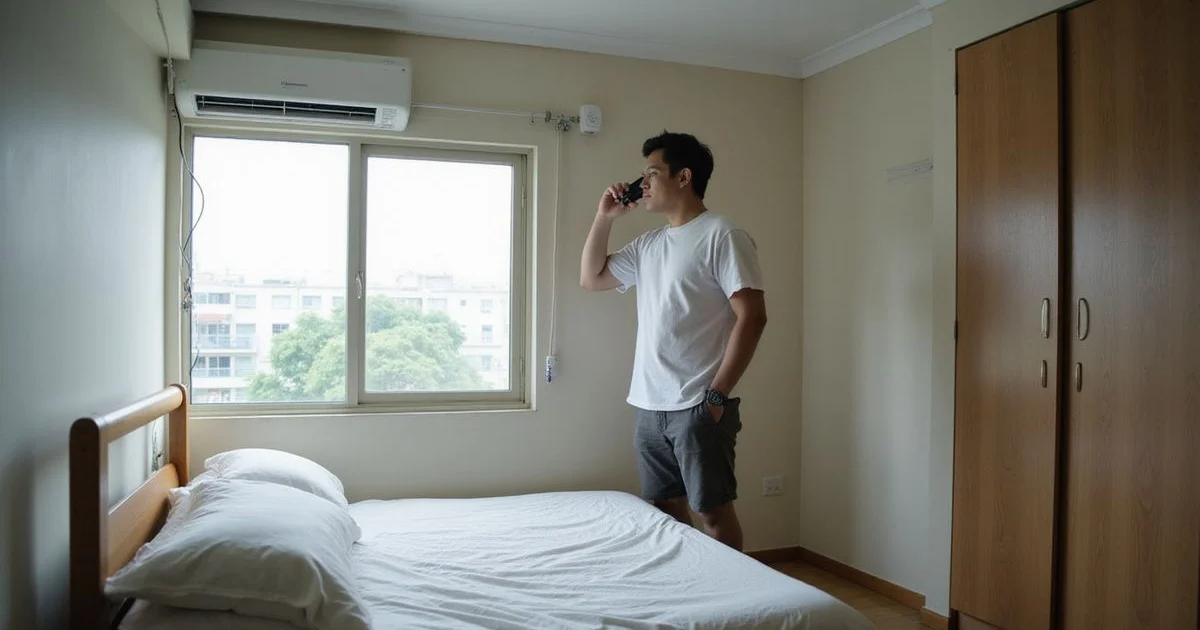
Normal sounds and worrying ones
A short hiss at start-up or shut-down is normal. A hiss that carries on while the unit runs is the one to worry about, because it can mean refrigerant is escaping from a joint or a damaged pipe.
Refrigerant moves through the pipes under pressure, and that pressure shifts when the compressor starts or stops. A brief hiss, a gurgle or a soft whoosh at those moments is common. If you want background on the gas itself, our Gas Top Up page covers it. Most newer Singapore units use R32, and a leak from any refrigerant gives a similar sound.
Here’s a quick way to tell what you’re hearing when you search for an aircon hissing sound:
| Sound | When | Likely meaning |
|---|---|---|
| Brief hiss or gurgle | At start-up or shut-down | Normal pressure settling |
| Soft whoosh | While running | Air moving, normal |
| Steady hiss | Continues while running | Possible refrigerant leak |
| Hiss with bubbling | Near a joint | Possible leak |
| Hiss after damage to a pipe | Any time | Likely leak |
If you have a multi-split system, listen at each indoor unit and at the outdoor unit. One outdoor unit feeds several rooms, so a leak on one pipe run can affect cooling in more than one room.
Signs that point to a leak
A steady hiss is more likely to be a leak if you also notice one or more of these:
- Cooling getting weaker over days or weeks.
- Ice on the copper pipe or coil. See ice on the aircon copper pipe.
- Oily marks or residue at a pipe joint, seen from a safe spot.
- A previous gas top up that did not last.
Low refrigerant also makes the unit run longer to reach the set temperature. If your power bill creeps up while the room still feels warm, that’s worth mentioning to the technician.
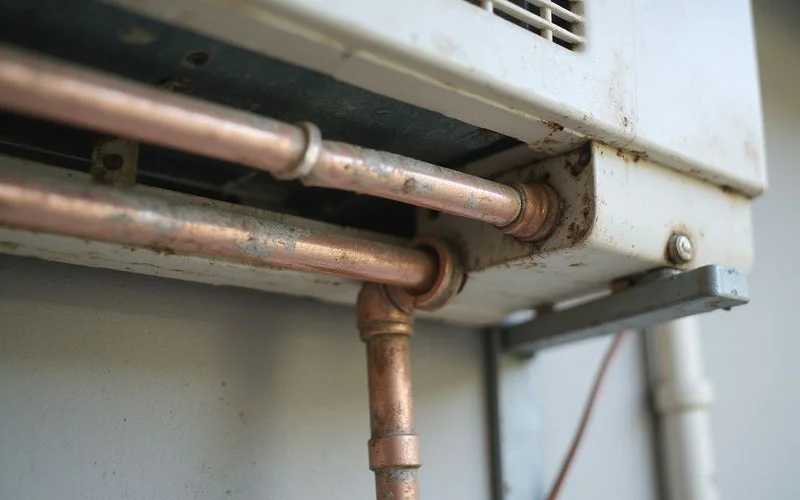
Do not touch pipes or fittings
Leave the pipes alone. Refrigerant is under pressure and can cause cold burns on contact.
Do not touch, tighten or tape pipe joints, valves or fittings. Do not use leak-detection kits or gauges yourself either. R32 is mildly flammable, so never hold a lighter or flame near a pipe to “check” for gas. Never climb out to reach an outdoor unit, especially from a high-floor HDB or condo ledge. A qualified technician should handle all of this.
Record it for the technician
A short phone recording helps most. It lets the technician hear what you heard, even if the unit behaves itself on the day of the visit.
Note when the hiss happens: at start-up, all the time, or only after the unit has run for a while. Mention which room or indoor unit it came from if you have a multi-split system. Landlords can send the clip and notes to the tenant’s contact, so the technician gets the same details.

Other noises
Hissing is only one sound. Rattling, buzzing, grinding and clicking have different causes, from loose panels to electrical faults. Our aircon making noise page covers those.
If it is a leak
The technician has to find the leak, repair it, and only then top up the refrigerant. Topping up without repairing just lets the gas escape again.
Ask for the diagnosis and repair to be quoted separately from the top up, so you can see what each step costs. Our gas top up vs leak repair page explains how to compare the two.
When to call a technician
Call us when you hear a steady hiss while the unit runs, especially with weaker cooling or ice on the pipes. Switch the unit off first, since running a unit low on refrigerant can strain the compressor.
A brief hiss only at start-up or shut-down, with the unit cooling normally, does not usually need a call. Mention it at your next service. If you’re unsure whether your aircon hissing sound is normal, send us your recording and we’ll tell you what we think.
Questions readers ask
Is a hissing aircon normal?
Brief hissing or gurgling at start-up or shut-down can be normal pressure sounds. A persistent hiss while the unit runs is not.
Is a hissing aircon dangerous?
Do not touch pipes or fittings. If the hiss is persistent, switch the unit off and call a technician. Refrigerant is under pressure and should only be handled by qualified technicians.
Does hissing mean I need gas?
It may mean a leak, which must be found and fixed first. Topping up without fixing the leak means the gas runs low again.
More guides in Gas Top Up
-
Does My Aircon Really Need a Gas Top Up?
Is low gas the real cause? Low-gas symptoms vs a dirty coil or filter, and what to ask the technician. Never handle refrigerant.
-
Gas Top Up vs Leak Repair: Why Aircon Gas Keeps Running Low
Why repeat gas top ups point to a leak, and how a top up only compares with finding and fixing the leak, with dated fees.
-
Ice on the Aircon Copper Pipe: Causes and What to Do
Why ice forms on an aircon copper pipe (low gas, blocked airflow, dirty coil), why to switch off and let it thaw, and when to call.
Back to the section
How refrigerant works, why a top up is not routine, what R22, R410A and R32 mean.
Learn more about Gas Top Up