Rules and Responsibility
Who to Contact About an Aircon Problem
Route each aircon problem to the right party: your aircon company, a neighbour, HDB, your Town Council, your MCST or a qualified person.
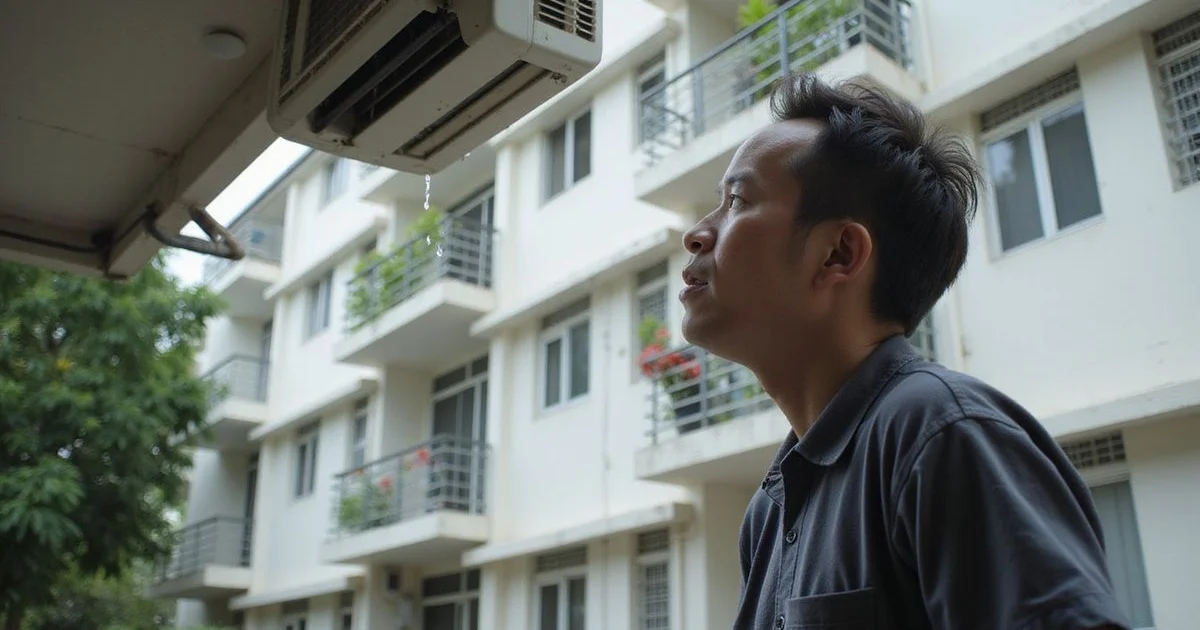
Match the problem to the right party
If you’re wondering who to call for an aircon problem, the answer depends on whose pipe, unit or bracket is at fault. Up to six parties can be involved: you, your aircon company, a neighbour, HDB, your Town Council or your MCST. A qualified person, such as a professional engineer, is sometimes needed too.
Calling the wrong one wastes days. We’ve seen it happen often, especially with drips from upstairs.
This guide routes each common problem to the right first contact. The rules on who pays sit in our water leaks between floors guide.
Decision table
Find your problem in the first column and start with the contact beside it. Most cases begin with a chat, not a complaint.
| Problem | First contact | If not resolved |
|---|---|---|
| Your own unit is not cold, leaking, smelly or noisy | An aircon company | Use the warranty if recently serviced |
| Water drips from a unit above onto your ledge or window | The neighbour above | HDB or Town Council (HDB), MCST (condo) |
| A ceiling stain you think comes from the flat above | The neighbour above | HDB or Town Council (HDB), MCST (condo) |
| A drain pipe that serves several condo units | The MCST | Follow up in writing |
| A rusty or loose outdoor unit bracket | Your aircon technician or a qualified person | Check BCA’s advice |
| A neighbour says your aircon drips on them | Check your unit, then book a service | Talk to the neighbour with the service report |
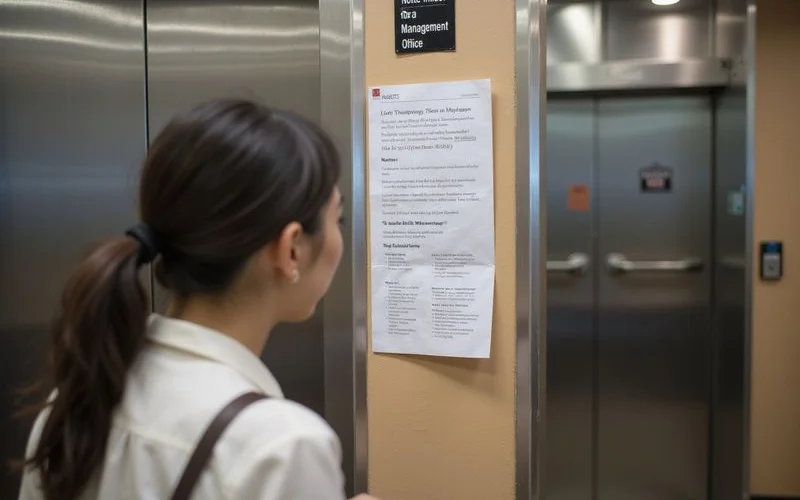
When the fault is in your own unit
If your aircon is not cold, leaks indoors, smells or makes a new noise, the repair is yours to arrange. The MCST, HDB and the Town Council don’t repair private aircon units.
Start with the safe checks before calling a technician. Then contact an aircon company.
If we serviced the unit recently and the same problem has come back, check the warranty on your receipt first. A repeat fault within the warranty period is usually a free return visit, not a new booking. Landlords should do the same before sending a tenant to a new company.
When water comes from above
Water dripping onto your window ledge, aircon ledge or laundry from a unit above is a common complaint. Speak to the neighbour first. It’s the quickest route, and many owners don’t know their drain is clogged until someone tells them.
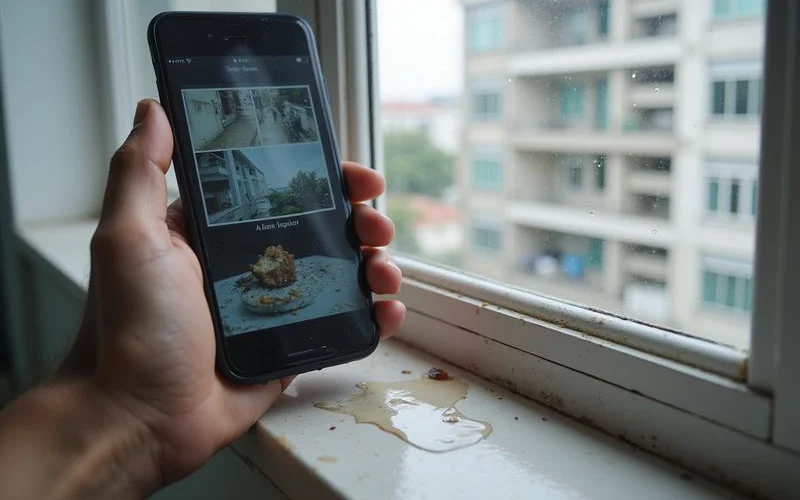
Bring dated photos and the times it happens. A clogged drain often shows up after a few hours of use, so timing helps the neighbour match the drip to their aircon.
If that does not work, the next step depends on where you live:
- HDB blocks. Contact HDB or your Town Council for guidance on next steps. For ceiling leaks, HDB says that if pipes are the cause, it will liaise with the neighbour above for repairs.
- Condos. Write to the MCST, with photos. Keep a copy.
For a ceiling stain inside your home, the aircon drip or ceiling seepage guide helps you work out whether an aircon is involved at all. Many stains turn out to be from a bathroom or pipe, and that changes who you call.
Shared pipes in condos
In a condo, a pipe that serves two or more units is common property. If a shared drain stack or pipe is leaking or blocked, report it to the MCST. A pipe that serves only your unit is yours, even if it runs through a wall.
BCA’s water seepage guide for strata owners follows the same split. Under section 29 of the Building Maintenance and Strata Management Act, the MCST must keep common property in good and serviceable repair. That’s why your written report matters, because it puts the problem on record.
Outdoor unit brackets
Outdoor units sit on brackets or ledges on the outside of the building. Brackets rust over time. BCA advises owners to have brackets and supports checked during servicing, and to replace badly corroded brackets with stainless steel ones.
Ask your technician at the next service, or a qualified person if you are worried now. BCA’s guidance on aircon structural supports suggests checking them at least every six months. Never lean or climb out to check.
See the outdoor unit bracket guide for the full steps.
Keep a record
Whoever you contact, keep three things:
- Dated photos of the drip, stain or bracket
- Notes of when the problem occurs
- Copies of messages and service receipts
A short written record makes every conversation easier. It also helps if an MCST, Town Council or HDB officer needs to see how long the issue has run.
Who to confirm with
If you still aren’t sure who to call for an aircon problem, start with the table above and work down the list. This guide is general information, not legal advice. Each body sets its own process.
Confirm the details for your case with HDB, your Town Council, your MCST, BCA or a qualified person. For faults in your own unit, the Common Aircon Faults section explains which problems a service may fix. Once you know which one applies, book a service and keep the report.
Questions readers ask
Who do I report an aircon dripping from above to?
Speak to the neighbour first, with photos and times. If that does not resolve it, contact HDB or your Town Council in an HDB block, or your MCST in a condo.
Does the MCST fix my aircon?
No. Your aircon and any pipe serving only your unit are yours to maintain. The MCST is concerned with common property, such as a pipe that serves two or more units.
Who checks a rusty outdoor bracket?
BCA advises having outdoor unit brackets checked during servicing and replacing badly corroded ones with stainless steel. Ask your aircon technician or a qualified person. Never climb out to check it yourself.
More rules and responsibility guides
-
Aircon Servicing in HDB Flats, Condos and Landed Homes: What Changes
How home type changes aircon servicing in Singapore: multi-split systems, condo work hours, ledge access and who to contact.
-
Landlord or Tenant: Who Pays for Aircon Servicing in a Singapore Rental
How the tenancy agreement decides who pays for aircon servicing and faults in a Singapore rental, and which records to keep.
-
Water Leaks Between Floors: Who Is Responsible in HDB Flats and Condos
Who pays when aircon water reaches the flat below? HDB and condo rules explained separately, with who to confirm them with.
Keep reading
Rules differ for HDB flats, condos and landed homes. Browse every guide by section, or start from the problem you have.