Common Faults
Aircon Drip or Ceiling Seepage?
Tell an aircon drip from ceiling seepage: where and when the water appears, stain patterns, and who to call for each.
Why it matters which one it is
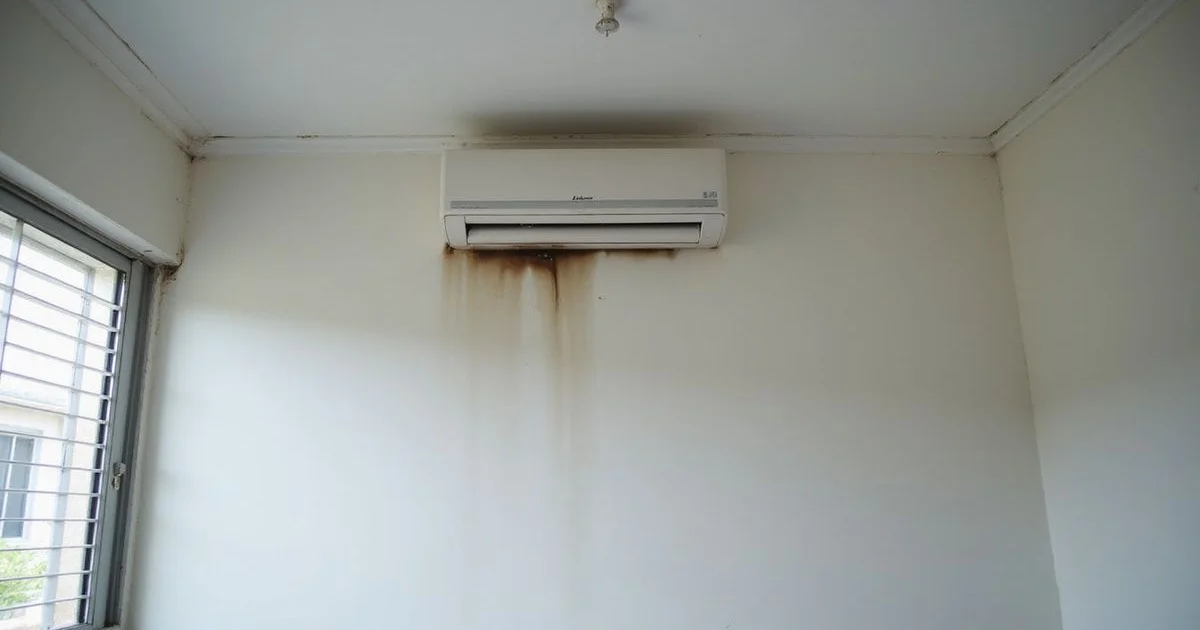
Aircon drip or ceiling seepage? Water near an aircon on the ceiling or wall can come from two very different places. An aircon drip is your unit’s problem and usually a quick fix.
Ceiling seepage is water coming through the slab from above or from a pipe. It may involve your neighbour, HDB, your Town Council or your MCST.
Calling the right person first saves time and money. For other aircon faults, see the Common Aircon Faults section.
We’ll walk through a simple timing test, the visual clues, and who to call in each case. That works the same whether you own an HDB flat, a condo unit or a rental.
The timing test
Switch your aircon off and leave it off for a day, keeping a towel under the spot. If you have a multi-split system, turn off the whole system, not just the nearest indoor unit. Another unit on the same outdoor compressor can muddy your result.
Then watch:
- The water stops when the aircon is off. It is very likely an aircon drip.
- The patch keeps growing or stays wet with the aircon off. It is more likely seepage or a pipe.
Note the times you see water, whether it rained, and whether the neighbour above might have been showering or running their own aircon. Those details help whoever you call next work out the source.
Side-by-side
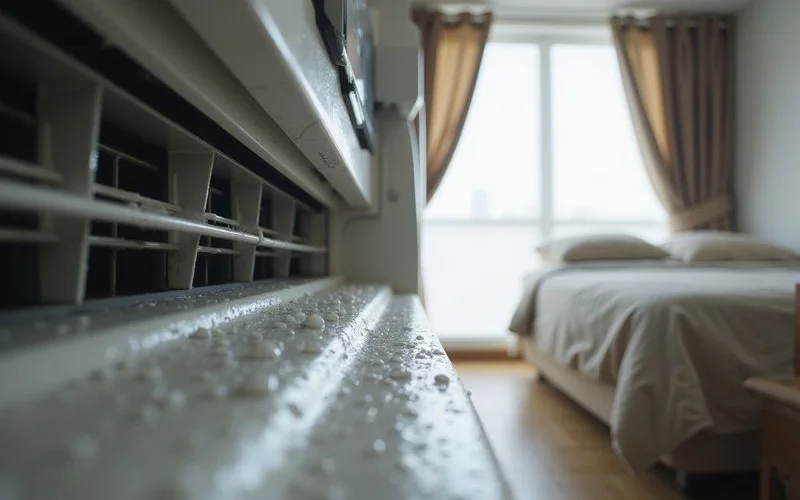
The quickest way to tell them apart is when the water appears and where it starts. A drip follows your aircon’s running hours, while seepage ignores them. Use this table as a checklist.
| Clue | Aircon drip | Ceiling seepage |
|---|---|---|
| When | Only while the aircon runs | Any time, with or without aircon |
| Where it starts | Bottom edge or side of the indoor unit | On the ceiling, may be away from the unit |
| Pattern | Drips, a trail down the wall below the unit | Spreading stain, rings, bubbling paint |
| Weather link | None | Sometimes worse after heavy rain |
| Who to call | An aircon technician | Neighbour, then HDB, Town Council or MCST |
Stains and patterns
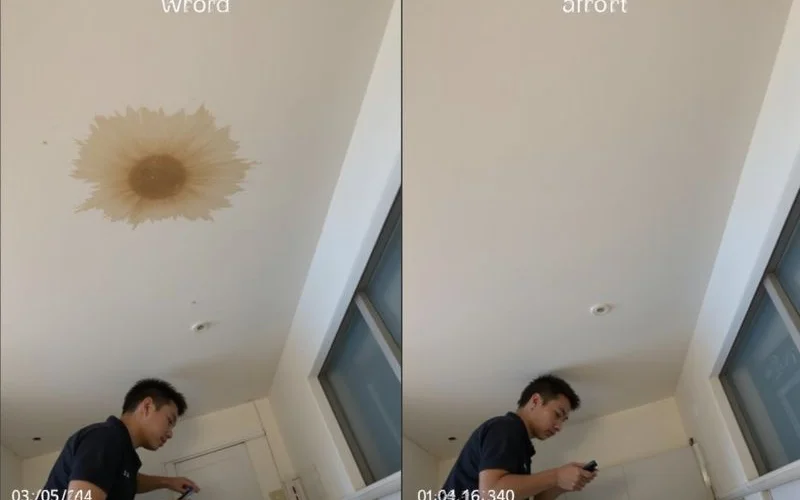
An aircon drip tends to leave a trail running straight down the wall under the unit, or drips on the floor below it. Ceiling seepage usually shows as a stain with rings, peeling or bubbling paint, or a patch that grows slowly from one spot. A stain a little way from the aircon can still be from a neighbour’s bathroom or pipe, so don’t assume the nearest unit is to blame.
Take dated photos on different days to track any change. HDB’s own Home Care Guide on ceiling leaks asks for details of when the leak happens, so a photo log gives you a ready answer.
If it is your aircon
The usual causes are a clogged drain pan or pipe, a dirty filter causing ice that melts, or a unit mounted at a poor angle. Most Singapore servicing guides name a choked drain pipe as the top culprit. Our humid climate means a lot of condensate, and dust and algae slowly build up into slime that blocks the line.
On a multi-split system, each indoor unit has its own drain line. Run each unit on its own for a few hours to find the one that drips.
- Clean the filters. A blocked filter can let the coil freeze, then melt and overflow.
- Check the drip pattern. Drips from the unit’s edge point to a blocked drain. A unit tilted the wrong way can also spill water.
- Book a service if it continues. A technician can clear the drain line and check the unit’s angle.
See why is my aircon leaking water for the full list of causes.
If it is seepage from above
Talk to the neighbour above first, with your photos and notes. If that does not resolve it, the next step depends on where you live.
- HDB flats. HDB treats a ceiling leak between two flats as the joint responsibility of the upper and lower owners. Contact HDB or your Town Council for guidance.
- Condos. A leak through a ceiling is presumed to come from the unit above unless that owner shows otherwise. Write to the owner above and the MCST.
HDB’s Goodwill Repair Assistance scheme can help with cost. According to the Ministry of National Development, HDB pays 50% of an eligible ceiling leak repair, and the upper and lower owners split the rest equally. If the upper owner’s renovation caused the leak, that owner is liable instead.
Two exceptions are worth knowing. If water enters through cavities such as window frames or old aircon panels, the flat owner is responsible. If you live on the top floor, the roof is common property, so contact your Town Council.
Condo owners can look to Section 101(8) of the Building Maintenance and Strata Management Act, which sets that presumption. Landlords should keep the photos and notes in one place, so a tenant’s report and your own records tell the same story.
The water leaks between floors guide explains these rules in more detail. This is general information, not legal advice.
When to call a technician
Call an aircon technician when the timing test points to your aircon, or when water drips from the unit itself. We’d book a service as soon as you see it, because a blocked drain rarely clears by itself.
If the test points to a ceiling leak near your aircon, contact your neighbour and then HDB, your Town Council or your MCST rather than an aircon company. Confirm any rules with them.
Not sure which one you have? Run the timing test tonight, take your first dated photo, and you’ll know who to call tomorrow.
Questions readers ask
How do I know if the leak is from my aircon?
Check whether it drips only when the aircon runs and whether the water comes from the unit itself. Switch the unit off for a day and see if the dripping stops.
What if the stain is on the ceiling?
It may be seepage from the flat above or a pipe. Contact the neighbour first, then HDB or your Town Council, or your MCST in a condo.
Who fixes ceiling seepage?
It depends on your home type. In HDB flats, ceiling leaks between two flats are the joint responsibility of the upper and lower owners. In condos, MCST rules apply. See the responsibility guide.
More guides in Common Aircon Faults
-
Aircon Making Noise: Rattling, Buzzing and Clicking Sounds
What rattling, buzzing and clicking aircon sounds mean, which ones mean stop using the unit, and whether servicing or a repair is needed.
-
Aircon Weak Airflow: Causes and Safe Checks
Why your aircon is not blowing strongly: clogged filters, dirty blower wheel, blocked coil or fan motor, and which fix each needs.
-
Safe Checks to Do Before Calling an Aircon Technician
A short safe checklist before calling an aircon technician: remote and mode, breaker status, filter, outdoor unit obstruction and notes.
-
Why Does My Aircon Smell Musty or Sour?
Musty or sour aircon smell? Mould on the coil and blower, stagnant drain water, and which clean fixes it. Burning smell: switch off.
-
Why Is My Aircon Leaking Water from the Indoor Unit?
Aircon dripping from the indoor unit? Common causes, safe steps to take now, and whether you need servicing or a repair.
-
Why Is My Aircon Not Cold? Causes of Warm Air
Aircon blowing warm air? Safe checks for settings and filters, then the causes servicing fixes and the ones that need a repair.
Back to the section
Weak cooling, water leaks, smells, weak airflow and noise, and which of them a service fixes.
Learn more about Common Aircon Faults