General Servicing
DIY Aircon Cleaning vs Professional Servicing
What you can safely clean on your aircon and what needs a technician, with the risks of DIY sprays and opening the unit.
The short answer
You can wash the filters and wipe the outer cover yourself. The coil, blower, drain and electrics belong to a technician. That’s our straight answer if you’re deciding whether to clean aircon yourself or hire someone.
DIY cleaning and professional servicing work as a pair. Your part is the filters and the outside cover. The technician’s part is everything inside.
Do your part well and the unit runs better between visits. The technician also finds less build-up when they arrive. Homejourney’s 2026 Singapore price guides put general servicing at roughly $25 to $40 per unit, so a clean start keeps the visit quick and fair.
For what a full visit covers, see the General Servicing section.
What owners can safely do
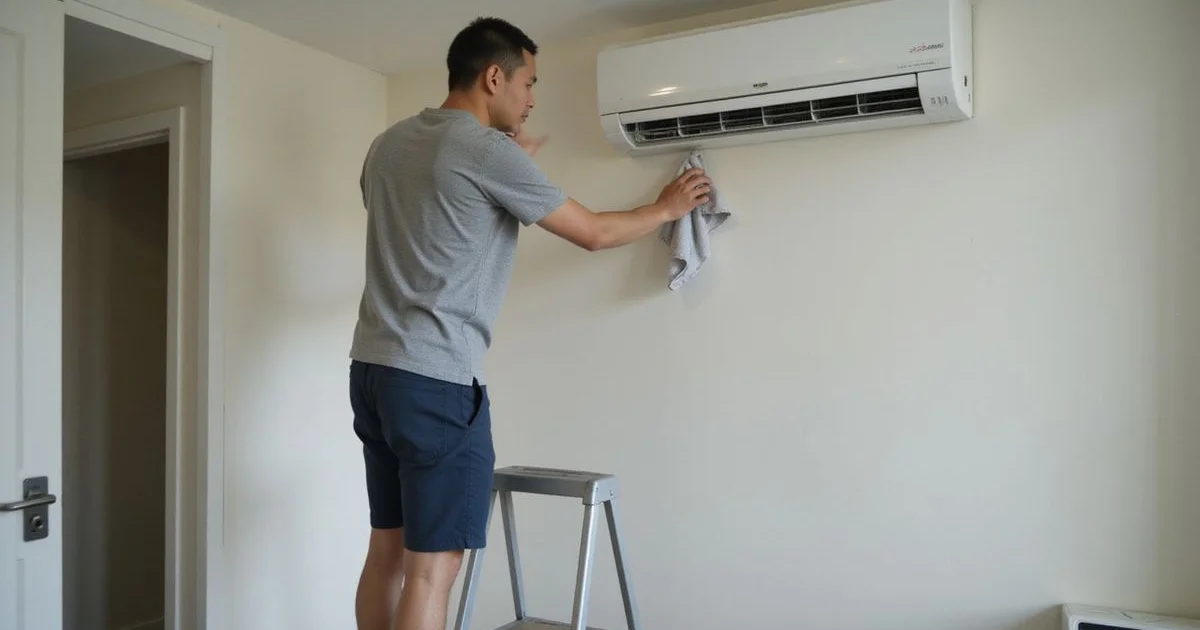
You can service the top layer of your aircon yourself, and that’s all. These five jobs are safe for most HDB, condo and rental units:
- Clean the air filters. Switch off, slide them out, rinse, dry fully and refit. The filter cleaning guide has the steps.
- Wipe the front cover and louvres. Use a damp cloth with the unit switched off.
- Keep the outdoor unit clear. From inside the home, check nothing is blocking it. Never climb out.
- Watch the drain outlet. A steady drip while the unit runs is normal.
- Keep notes. Write down dates of filter cleaning, services and any symptoms. Landlords will find these handy when a tenant reports a problem.
The filter is the job that pays off most. Singapore energy-saving guides, including advice linked to NEA, suggest washing it about every two weeks if the unit runs daily. Industry guides put the extra power use from a clogged filter at around 15% to 25%.
On a multi-split system, one outdoor unit feeds several indoor units. Repeat the filter routine on every indoor unit, not just the one in the living room.
What needs a technician
The limit of DIY is anything behind the filter. Those parts are fragile, wet or live, and a small mistake costs far more than a service visit.
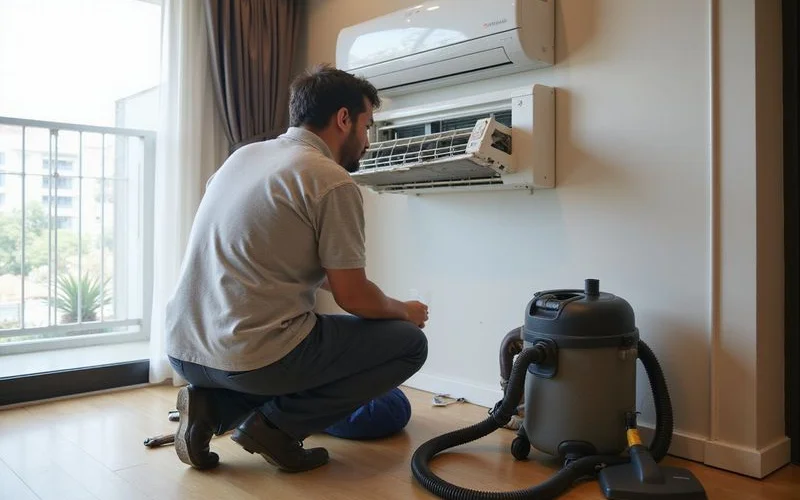
- The evaporator coil. Its thin fins bend easily, and cleaning it properly needs the right tools and rinsing.
- The blower wheel. Deep inside the unit, close to the fan motor and wiring.
- The drain pan and condensate pipe. Reaching the pan means opening the unit; flushing the pipe needs care. Stagnant water in a pan can also breed Aedes mosquitoes, so a blocked drain is more than a leak risk.
- Electrical parts. The control board, wiring and isolator. Never open these.
- Refrigerant. Never handle refrigerant or touch pipe fittings.
- The outdoor unit and bracket. Work at height or on ledges needs proper safety equipment.
Side-by-side
Here’s the split at a glance. If a task says “No” in the DIY column, leave it alone.
| Task | DIY | Technician |
|---|---|---|
| Wash air filters | Yes | Yes |
| Wipe cover and louvres | Yes | Yes |
| Clean coil | No | Yes |
| Clean blower wheel | No | Yes |
| Clear drain pan and flush pipe | No | Yes |
| Check outdoor unit and bracket | Look from inside only | Yes |
| Electrical and refrigerant work | Never | Yes |
| Test run and fault check | Basic | Yes |
Cost is the other half of the picture. Homejourney’s 2026 guides list a chemical wash at about $80 to $120 per unit, against $25 to $40 for general servicing. Multi-unit packages for 3 to 4 indoor units usually bring the per-unit price down.
Why DIY sprays cause problems
Aircon cleaning sprays are not safe to use on the coil, even though they’re sold for home use. They’re fine on a removed filter or the outer cover if the label allows it. The trouble starts when you spray inside the unit:
- Rinsing. A proper chemical wash rinses the coil thoroughly. A spray left to drip often leaves residue that collects dust and can smell.
- Run-off. The liquid and loosened dirt run into the drain pan, which can clog an already narrow drain and cause a leak.
- Electrical parts. Spray and drips can reach the control board and wiring.
- Hidden build-up. A spray on the front of the coil does nothing for mould on the blower.
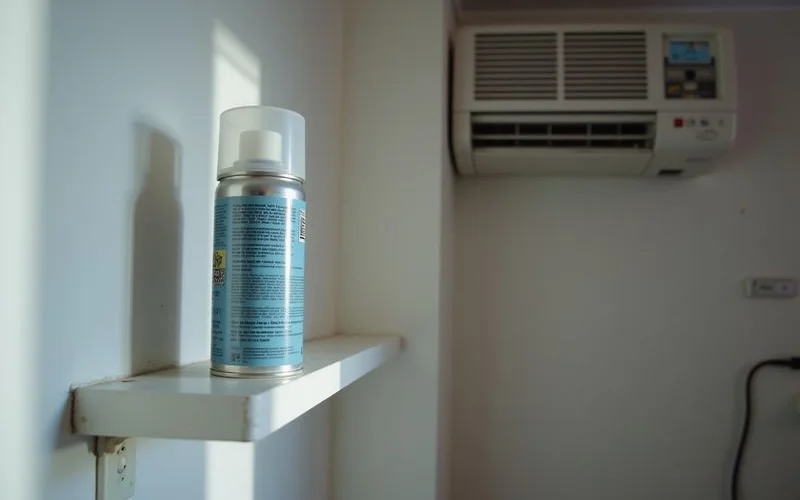
If you want a deeper clean, a chemical wash done by a technician includes proper rinsing and protection.
A sensible routine
A simple routine beats a heroic one-off clean. Here’s the rhythm we suggest for a home that uses its aircon most days:
- Clean the filters about every two weeks if the unit runs daily, or at least monthly if it doesn’t.
- Wipe the cover when you clean the filters.
- Book general servicing on a schedule that fits your run hours. Many Singapore providers suggest every three to four months for typical home use.
- Add a chemical wash only when signs of build-up appear.
When to call a technician
Call when clean filters do not fix weak airflow or cooling, when water drips from the unit, when a musty smell lingers, or when you see rust on the outdoor bracket. Any of these means the problem sits past the filter, where DIY stops.
Call straight away and switch off for a burning smell, buzzing or sparking.
Still unsure whether to clean aircon yourself or hire a pro? Do the filters, then watch for a week. If nothing improves, book a general servicing visit and tell the technician what you noticed, plus your filter and service notes.
Questions readers ask
Can DIY cleaning replace servicing?
No. DIY cleaning covers the filters and the outside cover only. The coil, blower, drain and electrical checks need a technician.
Are aircon cleaning sprays safe to use?
Avoid spraying products inside the unit. They are hard to rinse out properly, can leave residue on the coil and blower, and liquid can reach electrical parts.
What must a technician do?
Clean the coil and blower properly, clear and flush the drain pan and pipe, check the outdoor unit and brackets, and handle anything electrical or involving refrigerant.
More guides in General Servicing
-
Aircon Still Weak After Servicing: What Might Have Been Missed
Why cooling or airflow can stay weak after a service: build-up a service cannot reach, gas or electrical faults, and warranty next steps.
-
How Long Does Aircon Servicing Take? Signs of a Rushed Visit
Realistic time expectations for aircon servicing and the red flags of a rushed visit, like a ten-minute job or an uncleaned water tray.
-
How to Clean Aircon Filters Between Service Visits
Safe aircon filter cleaning for Singapore homes: switch off, remove, rinse, dry and refit, plus how often. No electrical parts.
-
How to Keep the Aircon Drain Line Clear of Slime and Clogs
Why aircon drain lines clog with slime in humid Singapore, the signs before a leak, safe owner checks and how servicing clears the line.
-
Outdoor Unit Brackets and Ledges: What BCA Advises Checking During Servicing
BCA advises checking outdoor aircon unit brackets during servicing and replacing badly corroded ones with stainless steel. Never climb out.
Back to the section
What a normal service visit covers, how long it takes and what the technician should check.
Learn more about General Servicing