Chemical Wash & Overhaul
What Happens During an Aircon Chemical Overhaul
What to expect in an aircon chemical overhaul: dismantling, soaking, coil and drain cleaning, reassembly, test run and final checks.
Before the technician arrives
A chemical overhaul is the deepest clean an indoor unit can get, and the most disruptive. A little prep makes the aircon chemical overhaul process smoother for everyone. If you’re still deciding whether you need one, see our Chemical Wash and Overhaul section.
Here’s what we ask customers to sort out first:
- Clear the area under each unit: beds, desks, shelves and anything on the wall below.
- Agree a washing area. Parts are usually soaked and washed on a service yard, balcony or in a bathroom. Ask what the technician needs.
- Check condo rules. Many condo management offices set contractor work hours, and some have a quiet period around midday. Our guide on getting ready for a service visit covers what to confirm.
- Be home. Someone should give access and check the result.
Step by step
A chemical overhaul has nine steps, from covering the floor to the final clean-up. What exactly comes off depends on your unit design, but the order is usually the same.
- Protect the area. The technician lays plastic sheets on the floor and wall and fits a catch bag if needed.
- Switch off and isolate. The unit is switched off at the isolator before work starts.
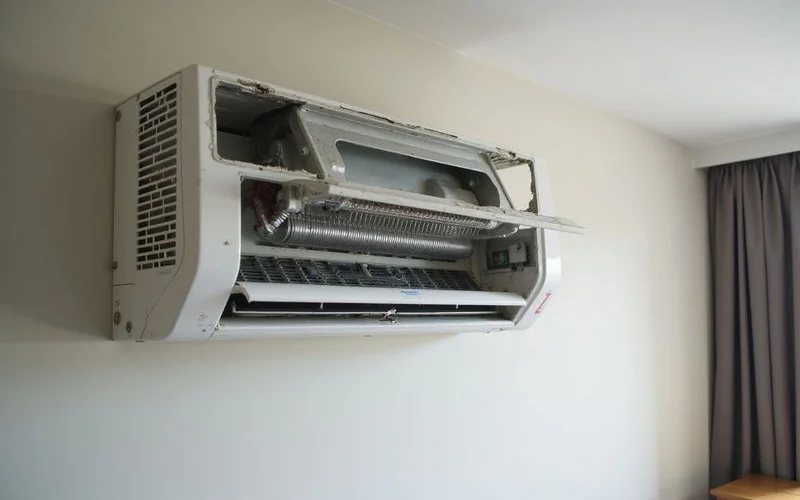
- Dismantle. Front cover, filters, louvres, side covers, blower wheel and drain pan come off. Electrical parts are protected or moved out of the way.
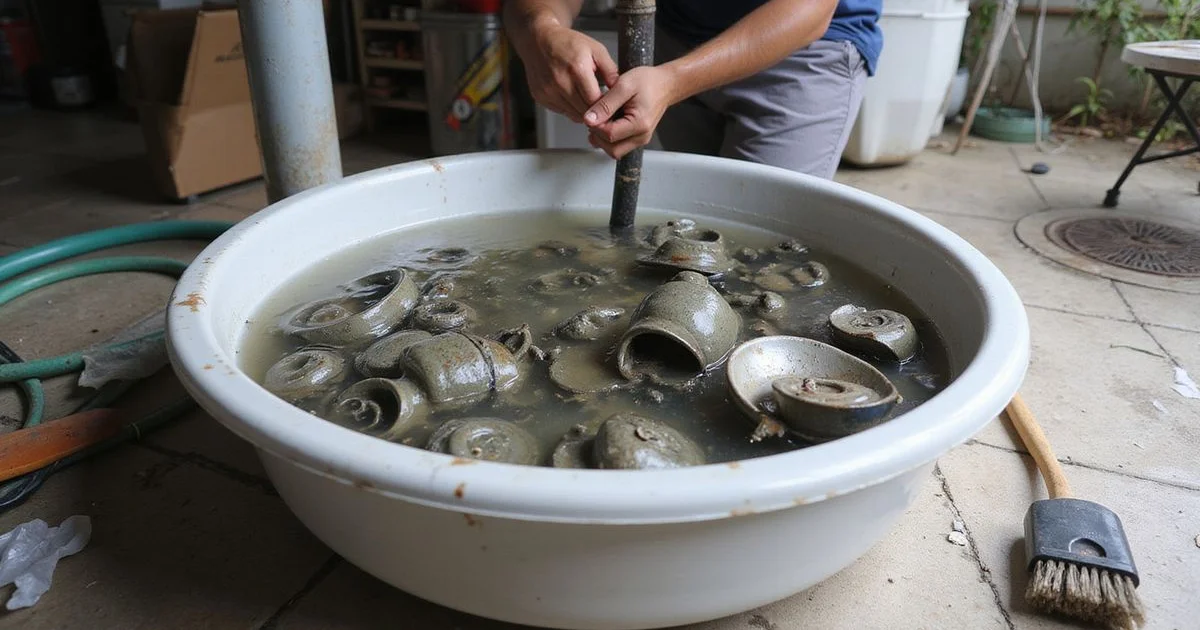
- Soak and wash the parts. The removable parts go into a basin with a cleaning solution, then get scrubbed and rinsed until clean. This is where heavy mould on the blower and slime in the drain pan come off.
- Clean the coil. The evaporator coil usually stays on the wall. It’s treated with a cleaning solution and rinsed through, with the water caught below.
- Clear the drain line. The condensate drain pipe is flushed so water flows freely from the outlet.
- Dry and reassemble. Parts are dried and refitted in order. Covers and louvres should sit firmly.
- Test run. The unit runs for a while so the technician can check cooling, airflow, drainage and noise.
- Clean up. Coverings come off, the area is wiped down and the rinse water is disposed of.
How long it takes
A chemical overhaul takes noticeably longer than a general service or a chemical wash, because each unit is taken apart and put back together. Published Singapore estimates vary a lot, from roughly 1.5 hours to 4 hours for one wall-mounted unit. That spread comes from the unit design, how dirty it is and how easy it is to reach.
Three things move the time the most:
- Number of units. A multi-split system with three indoor units means a much longer visit than a single unit.
- Level of build-up. A blower caked in mould takes longer to soak and scrub.
- Access. Units above tight shelving or in cramped rooms are slower to strip down.
Ask us for a realistic estimate per unit when you book, so you can plan your day. Be wary of any overhaul quote that promises only a few minutes per unit. That’s not enough time to dismantle, wash and refit a unit properly.
What to check before the technician leaves
Walk through this table with the technician before they pack up. It takes five minutes and saves a callback.
| Check | What good looks like |
|---|---|
| Cooling | Cold air within a few minutes |
| Airflow | Strong and even across the louvres |
| Drainage | Water flowing from the drain outlet, no drips indoors |
| Noise | No rattles or new sounds |
| Covers | Firmly fitted, louvres moving freely |
| Area | Wall and floor dry and clean |
| Paperwork | Receipt listing units, job and warranty |
Afterwards
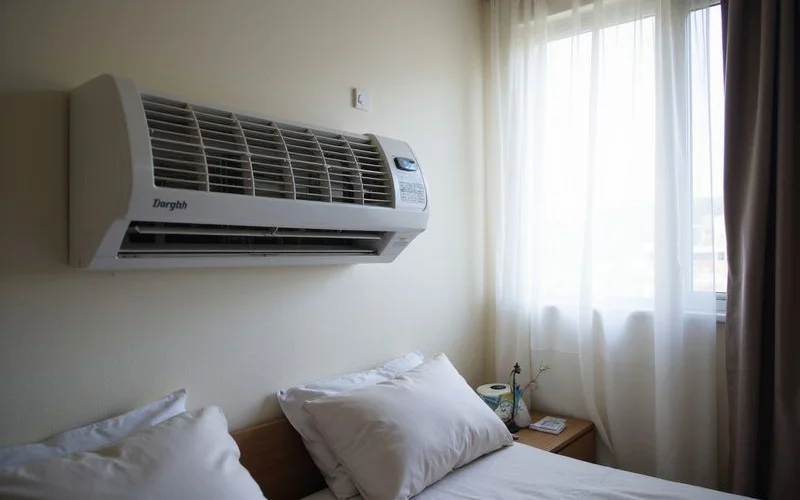
Run the unit as normal. A faint cleaning smell should fade quickly.
If water drips, the unit rattles, or cooling feels weak in the days after, contact the company within the warranty period. Keep the receipt with the date, since it’s your proof of when the job was done.
When to call a technician
Book an overhaul only when you see signs of heavy build-up, such as a blower coated in mould or a smell that returns after a chemical wash. If you’re asking “what is a chemical overhaul on an aircon, and do I need one?”, read chemical wash vs chemical overhaul first.
Then message us for photos and a written quote per unit. We’ll tell you straight if a wash is enough.
Questions readers ask
Do I need to clear space for an overhaul?
Yes. Clear the area under each unit and make sure there is a place to wash parts, such as a service yard, balcony or bathroom, as agreed with the technician.
What should I check at the end?
Cold air from the unit, no drips, covers and louvres fitted properly with no rattles, and the work area cleaned up.
Does the unit come off the wall?
Usually the removable parts are taken off and the main body stays mounted, but the scope varies by unit and job. Ask the technician what they will remove.
More guides in Chemical Wash and Overhaul
-
Black Spots on the Aircon Blower Wheel: What They Mean
What black spots on an aircon blower wheel mean in humid Singapore homes, how to spot them safely and what cleaning level they call for.
-
Chemical Wash vs Chemical Overhaul: Dismantle or Not?
Non-dismantle chemical wash vs full-dismantle overhaul: what each reaches, when dismantling matters, and dated prices before GST.
-
General Servicing vs Chemical Wash: Which Does Your Aircon Need?
Normal servicing or chemical wash? Compare scope and cost drivers, and see when a chemical wash is needed. Compares methods, not companies.
-
Is an Aircon Chemical Wash Safe for the Unit?
What a chemical wash involves, how walls and floors should be protected, what to ask about the chemicals used and the warranty after.
-
Told Your Aircon Needs an Overhaul? How to Check the Claim
How to judge a chemical overhaul recommendation: symptoms that support it, what a wash or service may fix, and asking for evidence.
Back to the section
What each deep-cleaning method does, when a unit needs it and when it does not.
Learn more about Chemical Wash and Overhaul