Chemical Wash & Overhaul
Is an Aircon Chemical Wash Safe for the Unit?
What a chemical wash involves, how walls and floors should be protected, what to ask about the chemicals used and the warranty after.
What a chemical wash involves
A chemical wash is safe for your aircon when the technician uses a coil-safe solution, rinses it fully and keeps the electrical parts dry. So, is an aircon chemical wash safe? Yes, and the outcome depends on how the job is done.
It is a deeper clean than a general service. The unit stays on the wall, and the steps run like this:
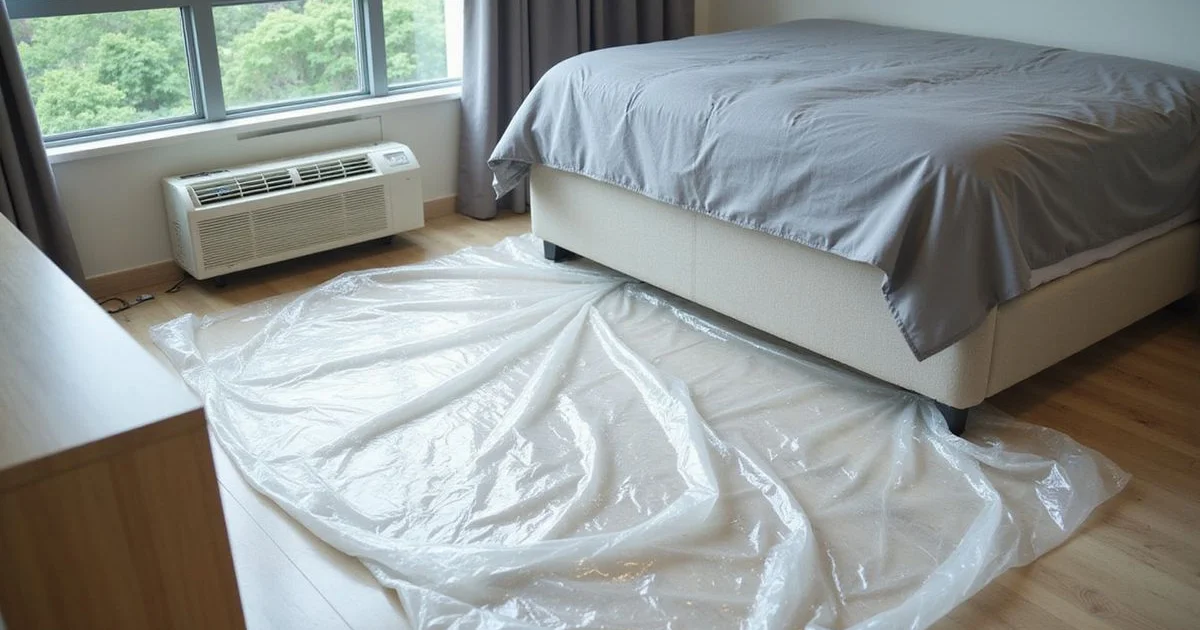
- The technician fits a plastic catch bag under the unit and covers the wall and floor.
- A cleaning solution goes onto the evaporator coil and blower wheel.
- The solution works for a short time.
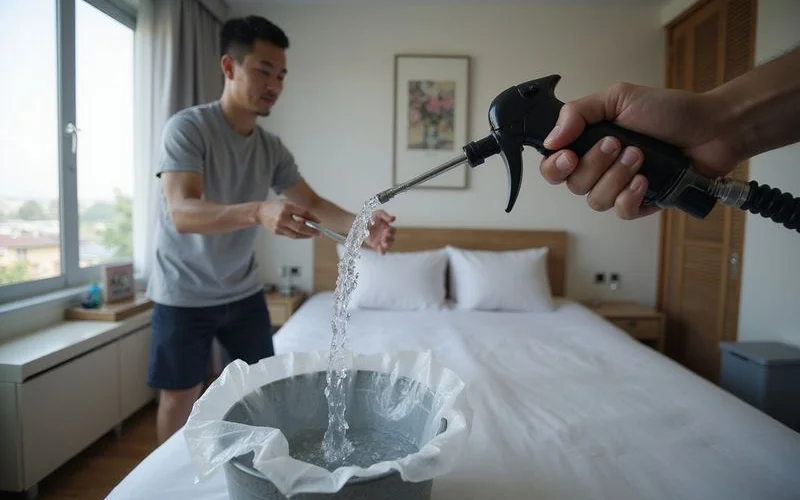
- The coil is rinsed through with water, and the dirty water runs into the bag and a bucket.
- The unit is reassembled and run on test.
Our Chemical Wash and Overhaul section explains how this compares with an overhaul.
Many owners worry because “chemical” sounds harsh. In practice, the word means a cleaning solution made for aircon coils.
What makes it safe for the unit
Chemical wash damage to an aircon is rare when three things are right:
- A suitable solution. Products made for aircon coils loosen dirt and mould without attacking the metal fins. Ask what product will be used.
- Thorough rinsing. Solution left on the coil or blower can keep working on the metal or leave a smell. The coil should be rinsed until the water runs clear.
- Electrical parts kept dry. The control board and wiring must be protected, or moved out of the splash area, before rinsing.
Each indoor unit gets its own wash. If you have a multi-split system, the checks above apply to every fan coil, not just the first one.
Protecting your home
A good job leaves no trace except a cleaner unit, and a chemical wash should not stain your wall. Most wall stain complaints trace back to missing or loose covering, so check these before work starts:
- A catch bag is fitted snugly under the unit.
- The wall below is covered with plastic.
- The floor and any furniture underneath are covered or moved.
- There is a bucket for rinse water.
At the end, the area should be wiped dry and the coverings removed.
If water marks appear on the wall later, tell the company within the warranty period. Landlords, take a quick photo of the wall before and after. It settles any later question with a tenant or the company.
Questions to ask first
Five questions will tell you most of what you need to know about a company before it touches your unit. Ask them when you book.
| Question | Why ask |
|---|---|
| What product will you use? | Confirms it is made for aircon coils |
| How will you rinse it? | Rinsing is what protects the metal |
| How will you protect the wall and floor? | Avoids stains and water damage |
| How long will it take per unit? | A very short time may mean rushed rinsing |
| What does the warranty cover? | Your fallback if a problem appears |
Price can be a clue too. Singapore pricing guides for 2026, such as the one from Homejourney, put chemical wash quotes at roughly S$60 to S$150 per fan coil. A quote far below that range is worth a closer question about the rinse.
We do not test or rate cleaning products, so we cannot recommend one. The point is to know what is being used and how.
Is it safe for people?
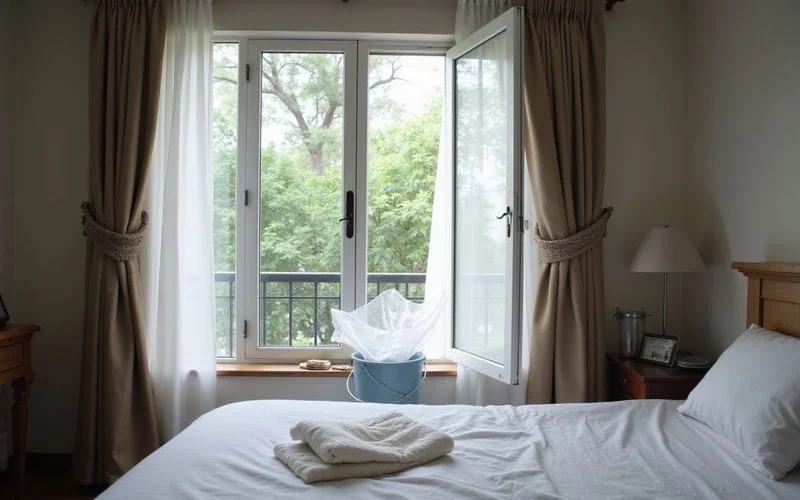
Yes, for most households, as long as the room is ventilated and the coil is rinsed well. The usual side effects of a chemical wash are a faint smell and a little dampness for a short while.
- Open a window during and after the job if you can.
- Keep children and pets out of the room while the work is going on.
- Expect any faint smell to fade once the unit has run for a while.
- If a strong chemical smell lasts, ask the company to check the rinse.
After the job
Run the unit and check for cold air, no drips and no unusual smell. With a multi-split system, test each indoor unit before the technician leaves.
Keep the receipt and note the warranty period. If water starts dripping or the unit stops cooling soon after, contact the company first. Our warranty claim guide explains what records to keep.
When to call a technician
Book a chemical wash only when there are signs of build-up that a general service has not cleared. Look for a returning smell, a clogged coil or black spots on the blower.
Never spray cleaning products into the unit yourself. Do-it-yourself sprays are often not rinsed properly and can reach electrical parts.
Before you book, run through the questions above and ask for the product, the rinse method and the warranty in writing. A company that answers them clearly is usually one that will do the job properly.
Questions readers ask
Can a chemical wash damage my aircon?
Done properly, it should not. Problems tend to come from a harsh solution or poor rinsing. Ask what is used and how the coil and blower are rinsed afterwards.
Will it stain my wall?
It should not if the wall and floor are covered and a catch bag is fitted under the unit before work starts. Check this is done.
Is there a warranty after a chemical wash?
Most companies give a workmanship warranty. Ask for the length and what it covers in writing, and keep the receipt.
More guides in Chemical Wash and Overhaul
-
Black Spots on the Aircon Blower Wheel: What They Mean
What black spots on an aircon blower wheel mean in humid Singapore homes, how to spot them safely and what cleaning level they call for.
-
Chemical Wash vs Chemical Overhaul: Dismantle or Not?
Non-dismantle chemical wash vs full-dismantle overhaul: what each reaches, when dismantling matters, and dated prices before GST.
-
General Servicing vs Chemical Wash: Which Does Your Aircon Need?
Normal servicing or chemical wash? Compare scope and cost drivers, and see when a chemical wash is needed. Compares methods, not companies.
-
Told Your Aircon Needs an Overhaul? How to Check the Claim
How to judge a chemical overhaul recommendation: symptoms that support it, what a wash or service may fix, and asking for evidence.
-
What Happens During an Aircon Chemical Overhaul, Step by Step
What to expect in an aircon chemical overhaul: dismantling, soaking, coil and drain cleaning, reassembly, test run and final checks.
Back to the section
What each deep-cleaning method does, when a unit needs it and when it does not.
Learn more about Chemical Wash and Overhaul