Chemical Wash & Overhaul
Black Spots on the Aircon Blower Wheel
What black spots on an aircon blower wheel mean in humid Singapore homes, how to spot them safely and what cleaning level they call for.
What you are seeing
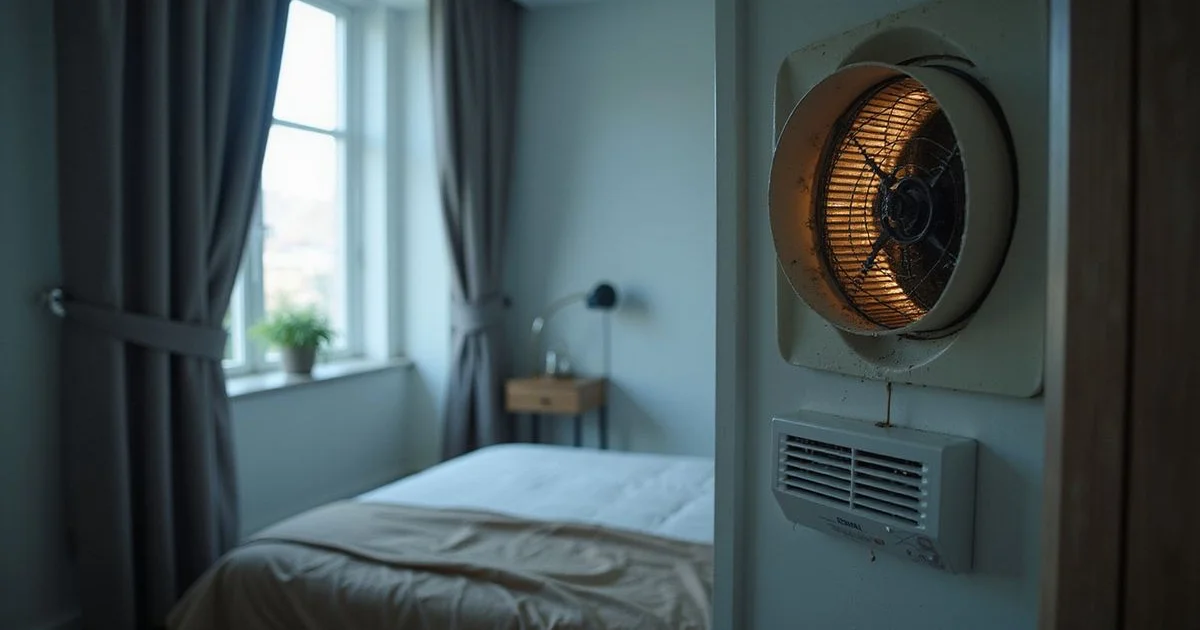
Black spots on the blower wheel are almost always mould growing on dust that has stuck to damp blades. The blower wheel is the long, drum-shaped fan inside the indoor unit. It sits behind the air outlet, just below the louvres, and spins to push cooled air into the room.
Air reaching the blower has just passed over the cold, wet coil, so the blades stay damp while the unit runs. Singapore’s annual average relative humidity is around 82%, according to the National Environment Agency. Mould grows easily once indoor humidity stays above 60%, so dust on a damp blade is a good place for it to settle. Our Chemical Wash and Overhaul page explains how deep cleaning deals with it.
You may notice other signs before you see any spots:
- A musty smell when you switch the unit on
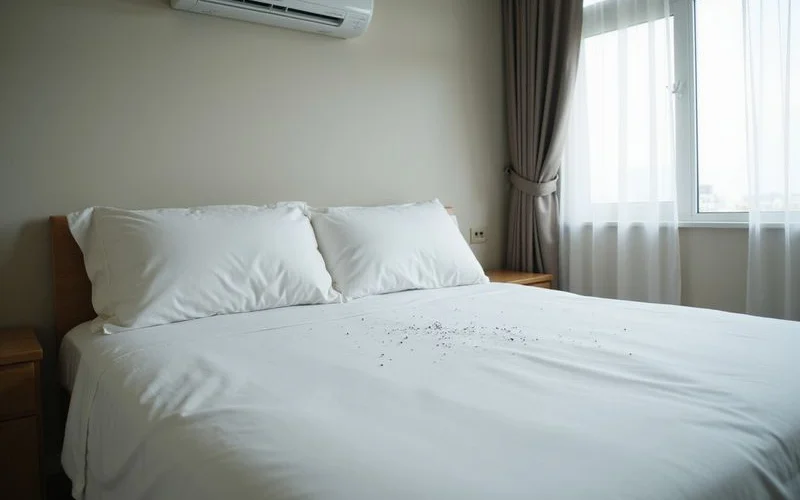
- Small black flecks on bedding, or on the wall below the unit
- Airflow that feels weaker than before
In a multi-split system, each indoor unit has its own blower. One room can be clean while another is covered, so check them one by one.
How to check safely
You can check the blower by looking only. Nothing needs to be touched or taken apart.
- Switch the unit off with the remote and wait for the louvres to close and open again, or gently open them by hand.
- Shine a torch into the air outlet at an angle.
- Look at the blades of the blower wheel. Clean blades are pale. Dark speckles or a grey-black fur suggest build-up.
Take a phone photo with the flash on. It gives you something to compare against after a clean, and landlords can keep it as a record for each unit.
Do not reach in, push brushes into the outlet, or spray anything inside. The blower is fragile, and the motor and wiring sit close by.
Why a general service may not reach it
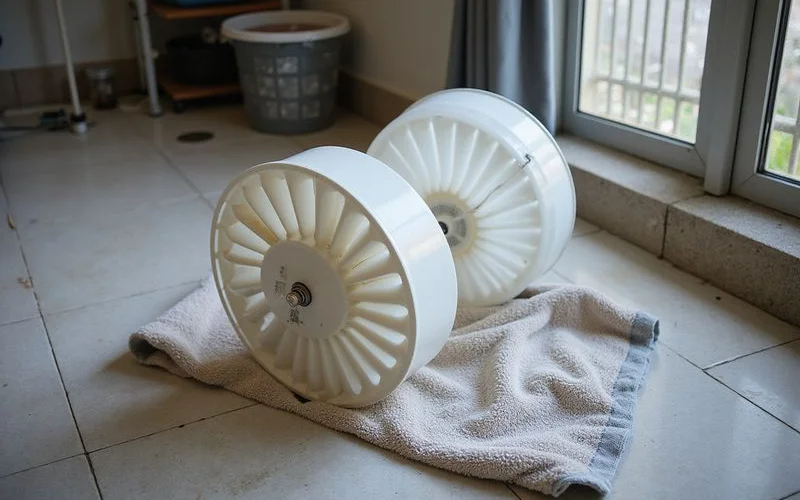
A general service often cannot clean a heavily mouldy blower, because the mould sits deep between the blades. A general service cleans the filters, the front of the coil and the drain. It also covers the parts of the blower that can be reached without taking the unit apart.
Mould packed between the blades is hard to remove from the outlet side. That is why a musty smell sometimes comes back soon after a normal service.
Which cleaning level fits
Match the cleaning level to what you see on the blades and what you smell.
| What you see | Likely next step |
|---|---|
| A few light specks, no smell | General service, then check again |
| Clear spotting and a musty smell | Chemical wash |
| Heavy black coating, smell returns after washes | Chemical overhaul (dismantled) |
A chemical wash applies a cleaning solution to the coil and blower in place and rinses them. A chemical overhaul takes the blower and other parts out so they can be soaked and washed. The chemical wash vs chemical overhaul guide explains the difference in more detail.
Slowing it down
You cannot stop mould growing in a humid climate, but you can slow it down. These habits help most:
- Clean the filters regularly, for example every few weeks if the unit runs daily, so less dust reaches the blower.
- Run the fan for a short time after switching off cooling to help dry the inside, if your unit allows it.
- Keep up with general servicing so build-up does not get a head start. Most Singapore servicing providers suggest every three to six months, depending on how often you use the unit.
See why does my aircon smell musty for more on the smell side.
When to call a technician
Call a technician as soon as you see black spots on the blower, black dots coming out of the aircon, or a musty smell that returns soon after a general service. Black flecks landing on surfaces below the unit are also a sign the mould is now being blown into the room.
Before the visit, take the torch photo described above. Then ask the technician to:
- Show you a photo of the blower before and after cleaning
- Explain whether a wash or an overhaul is needed, and why
For tenanted flats, keep those photos with your servicing records. They show the unit was looked after.
Questions readers ask
Are black spots in my aircon mould?
Often, yes. Black spots on the blower wheel are usually mould mixed with dirt that has built up in humid conditions. A technician can confirm.
Will general servicing remove them?
Not always. A general service cleans the parts that can be reached from the front. Build-up deep on the blower wheel often needs a chemical wash or an overhaul.
Can I clean the blower myself?
No. Do not open the unit or push brushes or sprays into the outlet. The blower and its motor are technician work.
More guides in Chemical Wash and Overhaul
-
Chemical Wash vs Chemical Overhaul: Dismantle or Not?
Non-dismantle chemical wash vs full-dismantle overhaul: what each reaches, when dismantling matters, and dated prices before GST.
-
General Servicing vs Chemical Wash: Which Does Your Aircon Need?
Normal servicing or chemical wash? Compare scope and cost drivers, and see when a chemical wash is needed. Compares methods, not companies.
-
Is an Aircon Chemical Wash Safe for the Unit?
What a chemical wash involves, how walls and floors should be protected, what to ask about the chemicals used and the warranty after.
-
Told Your Aircon Needs an Overhaul? How to Check the Claim
How to judge a chemical overhaul recommendation: symptoms that support it, what a wash or service may fix, and asking for evidence.
-
What Happens During an Aircon Chemical Overhaul, Step by Step
What to expect in an aircon chemical overhaul: dismantling, soaking, coil and drain cleaning, reassembly, test run and final checks.
Back to the section
What each deep-cleaning method does, when a unit needs it and when it does not.
Learn more about Chemical Wash and Overhaul